

For Menopause Awareness Month, I wanted to talk about something women in our Wellbel community bring up with us all the time: "What is happening to my hair?"
As a co-founder of Wellbel who has been through menopause, it's a question I understand personally. So I asked Dr.Jenny Sobera, a board-certified dermatologist about what's happening to our hair during menopause and what can actually help.
"This just isn't my hair anymore."
My patients describe it in different ways. Their hair feels finer, drier or more fragile. Their part looks wider. Some have quietly stopped wearing it down. Or they catch themselves in a photo and think, wait, is that my scalp?

What is menopause actually doing to my hair?
Hair grows in cycles. Each strand spends years growing before entering a resting phase, shedding, and eventually being replaced.
Estrogen helps keep hair in that growing phase longer. As estrogen declines during menopause, changes in the hair growth cycle can contribute to more shedding, slower growth and less fullness.
The balance between estrogen and androgens shifts, too. For women with a genetic predisposition to thinning, these changes can make it more noticeable, particularly along the part and at the crown. Often, the first sign isn't handfuls of hair falling out but gradually seeing more scalp under the bathroom light.
Hormonal changes can also affect scalp oil production and strand thickness, leaving hair drier, finer, or more fragile. You might even notice changes in its texture or how well it holds a style. Curls may loosen, or a style that once lasted for days may fall flat by lunchtime.
If your usual routine suddenly isn't working, your hair may simply need something different.
Is it menopause, or something else?
Menopause can play a significant role, but hormones don't always explain every change.
Shedding can appear months after a trigger, so what you're seeing today may reflect something that happened much earlier. Sometimes menopause is the main driver; sometimes nutritional deficiencies, other health changes, or a combination of factors are involved.
That's one reason I may recommend bloodwork. It can help identify underlying issues affecting your hair rather than assuming menopause is the sole cause.
Understanding what's behind the change is the first step toward finding the right approach.
So what actually helps?
There's no single solution for every woman. The goal is to address what's contributing to thinning or shedding while supporting the health of the hair you have.
If an underlying health issue needs attention, start there. Depending on the type and cause of hair loss, a dermatologist may recommend topical minoxidil or other prescription treatments. These address certain types of hair loss, while nutrition and daily hair care provide complementary support.
Start with the basics: adequate protein, a varied, nutrient-rich diet, quality sleep, and stress management. These habits help support overall health, including healthy hair.
Your hair care routine may need to evolve, too. If your hair is drier, focus on hydration and avoid products that leave it feeling stripped. If it's finer, lightweight formulas may work better. In my own routine, I use Wellbel's Gelée Detox Shampoo and Restorative Conditioner to keep my scalp clean while maintaining the moisture my hair needs as it becomes more fragile.
If breakage is a concern, reducing heat styling and avoiding very tight hairstyles can also help protect your hair.
Above all, be consistent. Hair grows slowly, and results take time. Some women may notice changes after three months, while evaluating certain treatments can take six months or longer. The timeline depends on the cause and the approach.

Where a supplement fits in
Nutrition is one part of healthy hair, and a supplement can help fill specific nutritional gaps. But more ingredients don't automatically mean better results.
As a physician, I look at who developed a formula, why its ingredients were selected, and how they're intended to work together. That's what I appreciate about Wellbel's approach.
For example, MSM provides sulfur used in the body's structural proteins, while betaine HCl supports the stomach's digestive environment. These ingredients reflect an approach that considers more than hair alone.
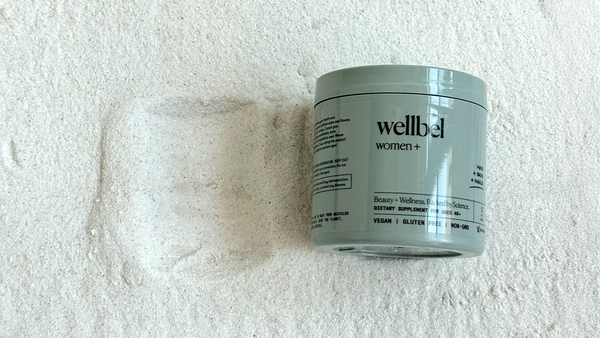
I take Wellbel Women+ Hair Supplement, formulated specifically for women in perimenopause and menopause. It includes saw palmetto and stinging nettle, ingredients selected with the hormonal changes of this life stage in mind.
Women also often ask whether they can take Wellbel alongside other hair-loss treatments. A supplement can be part of your routine alongside topical minoxidil or other dermatologist-recommended treatments; they serve different purposes. Always review your supplements and medications with your healthcare provider.
For me, Wellbel is one part of caring for my hair, along with good nutrition, a healthy scalp and being consistent with my routine.
What's normal, and when should I see a dermatologist?
Some daily shedding is completely normal. What matters more than counting hairs is noticing when something has changed for you.
If you notice increased shedding that persists for several weeks, a widening part, more visible scalp, a thin or bare patch, or an itchy, tender, or uncomfortable scalp, it's worth seeing a dermatologist.
One simple habit I recommend is photographing your part once a month in the same place and lighting. Because hair changes happen gradually, they're difficult to spot day to day. Photos give you an objective way to track what's changing over time.
One thing I share with all my patients
We talk a lot about hot flashes, sleep, and brain fog during menopause. Hair gets less attention, even though its changes can be difficult to ignore.
Hair is personal. It's part of how we recognize ourselves, and when it changes, it can affect our confidence in ways that are hard to explain.
I want women to know that these changes deserve attention. You don't have to accept thinning or shedding as simply another part of getting older. There are things we can do to support our hair, and understanding what's happening is a good place to start.